

Every now and then, a piece of content lands that’s worth more than just a quick read — it signals a genuine shift in an industry.
That’s exactly what’s happening with a recent post from Abingdon Health, announcing their partnership with SymbioTex.
👉 You can read the original blog here:
Meet Our Breakthrough Eco-Cassette Materials Partner – Abingdon Health
But if you don’t have time to dig into the full thing, here’s the short version — and why it actually matters.
The Problem: Billions of Tests, Billions of Plastic Casings
Lateral flow tests have become part of everyday life — from pregnancy tests to COVID diagnostics.
The issue? Scale.
Over 2 billion tests produced globally each year
Each one generates 12.3g of plastic waste
The cassette alone = ~40% of that plastic footprint
And here’s the kicker:
Most of it can’t be recycled.
Medical-grade plastics, infection control requirements, and multi-material designs mean traditional recycling simply doesn’t work here.
So instead of trying to fix plastic… Abingdon Health are looking to replace it entirely.
The Solution: Seaweed-Based, Compostable Cassettes
This is where SymbioTex comes in.
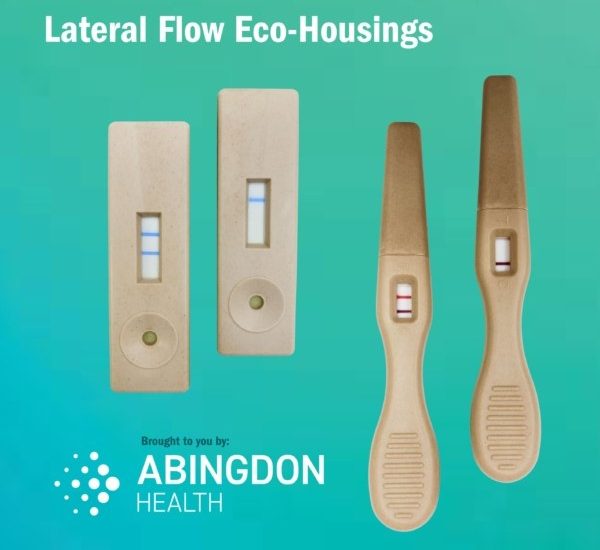
They’ve developed a bio-based material derived from red seaweed that can be used to manufacture diagnostic housings — the same ones currently made from polystyrene.
Key difference?
👉 It’s actually compostable
Not “technically recyclable” or “industrially compostable if conditions are perfect” — but genuinely designed to break down naturally.
Why Seaweed (And Not Another “Eco Plastic”)?
Seaweed ticks a lot of boxes that other bioplastics don’t:
No need for arable land or freshwater
Fast-growing (around 45-day cycles)
Naturally absorbs carbon
Doesn’t compete with food production
Compare that to materials like PLA (corn-based plastics), and it’s a much cleaner starting point.
The Bit That Makes This Real: It Works at Scale
This isn’t just a concept or a lab experiment.
Abingdon Health have already:
Developed working prototypes
Tested standard and mid-stream cassette formats
Proven compatibility with existing injection moulding equipment
Which is huge.
Because it means manufacturers don’t need to rebuild their entire production line to adopt it.
Even better — it’s reportedly at a similar price point to traditional plastic.
That’s the moment sustainability stops being a “nice idea” and becomes commercially viable.
Why This Matters (Beyond the Obvious)
There are three big takeaways here:
1. Sustainability Is Becoming Non-Negotiable
With targets like NHS Net Zero by 2045, this kind of innovation isn’t optional — it’s inevitable.
2. Greenwashing Won’t Cut It
This isn’t a marginal gain or a marketing spin. It’s a material-level change.
3. First Movers Will Win
Companies that adopt genuinely sustainable materials early will have a clear edge — commercially and reputationally.
So… What Happens Next?
Abingdon Health’s message is pretty clear:
The science works
The manufacturing works
The business case works
Now it’s about who moves first.
Because the question isn’t whether the diagnostics industry will shift away from single-use plastics…
…it’s who’s going to lead it.
If you’re working in MedTech, manufacturing, or product development, this is well worth a deeper read: